


Part Number: 200-230DX
Large Core Duplex Tight Buffer Fiber Cable, 3.0mm, 200/230μm (MOQ: 2 Kilometers)
Large core optical fiber is made from silica glass, which is excellent for transmission of high density optical energy from ultraviolet rays to near infrared rays. Since the core area ratio is larger than telecommunication optical fiber, large light energy such as laser can be transmitted at low attenuation. And since the core diameter is large, inputting the lights to the core can be comparatively easier.
This is a 200/230μm fiber optic indoor cable, the fiber is wrapped by Kevlar Yarn, which could ensure a good performance of tensile strength, and surrounded by 3.0mm outer Jacket.
Item Details
- Fiber Type: 200/230μm
- Cable Type: Duplex
- Cable Diameter: 3.0mm
- MOQ (Minimum Order Quantity): 2km
Comparison of Large Core Fiber & Traditional Optical Fiber
Large core fiber works in same manner as traditional optical fiber and offers some advantages over some traditional fiber optic designs.
There are physical limitations associated with traditional plastic and glass fibers, both are made in small diameters to maintain flexibility. Therefore, these fibers are gathered in “bunches” to make larger working diameters. Because large core fibers use a single large core, they do a better job coupling light from large focal spot devices. (See illustration below)
Large core fibers are flexible, but not as flexible as the same diameter made from small diameter fibers.
When bent at sharp angles, large diameter fibers are less efficient. (They lose more light than their small diameter fiber counterparts)
In general, large core fiber optic lighting offers the following advantages:
- More prone to deterioration from UV sources
- Can be field applied and installed by almost anyone. (no grinding or polishing; but the “cleave” should be uniform and perpendicular to the body of the fiber)
- More light is transmitted.(within equivalent areas)
- Better color rendering – more blue light stays in the fiber for longer distances, making the light output look “whiter” and/or “brighter”
- Approximate the look of neon without the cost
- Higher temperature resistance than PMMA (Plastic acrylic) fiber (100℃vs 70℃)
- Available in side emitting type
- Reduced transmission of IR energy - less heat is transferred.(No filters required)
- More prone to deterioration from UV sources
- Not so flexible
- Exposure to water/moisture will corrode the core, making the fiber useless
- Special jacket is required for outdoor use
- Prone to chemical metamorphosis within the core; the material becomes less flexible over time
Package
Package 2: usually for outdoor cable, heavy weight cables
Usually for each roll, the cable length is 2km, but we could provide customized package for different cable lengths.
Mark
Usually we only attach Test Report on the out package of the cable, but we could also mark as your requirements, such as:
1. Company Name
2. Cross /Net weight
3. Drum No: XX
4. Cable Length : XX
Cable production throughout the chart
This product belongs to F-tone Networks' optical components product line. For detailed specifications, please contact our sales team. Thank you!
Important Notice:
Performance figures, data and any illustrative material provided in this data sheet are typical and must be specifically confirmed in writing by F-tone Networks before they become applicable to any particular order or contract. In accordance with the F-tone Networks policy of continuous improvement specifications may change without notice.
The publication of information in this data sheet does not imply freedom from patent or other protective rights of F-tone Networks or others. Further details are available from any F-tone Networks sales representative.
HFBR-1414TZ | HFBR-2412TZ AVAGO compatible full series
-
Совместимость с AVAGO HFBR-1414TZ Оптическое волокно 850 нм Высокопроизводительное оптоэлектронное передающее устройство DC-50 Мбод
Обычная цена $0.00Обычная цена -
Совместимость с AVAGO AFBR-2418TZ Оптическое волокно 850 нм Высокопроизводительное оптоэлектронное приемное устройство DC-50 Мбод
Обычная цена $0.00Обычная цена -
AVAGO HFBR-1412TZ Совместимое оптоволокно 850 нм Высокопроизводительное оптоэлектронное приемопередающее устройство DC-5 Мбод
Обычная цена $0.00Обычная цена -
AVAGO HFBR-2412TZ Совместимое оптоволокно 850 нм Высокопроизводительное оптоэлектронное приемопередающее устройство DC-5 Мбод
Обычная цена $0.00Обычная цена

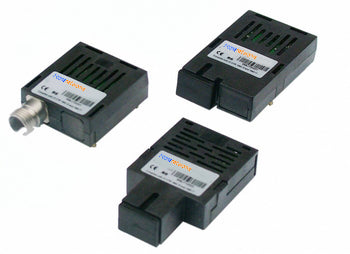
HFBR-1521Z | HFBR-2521Z | AFBR-1629Z | HFBR-2629Z AVAGO compatible full series
-
Совместимый с Cisco 10GBASE-BX20-D BiDi SFP+ 1330 нм-TX/1270 нм-RX 20 км DDM Simplex LC SMF модуль трансивера
Обычная цена $0.00Обычная цена -
AVAGO HFBR-1521Z Совместимое оптоволокно 650 нм Высокопроизводительное оптоэлектронное приемопередающее устройство DC-5 Мбод
Обычная цена $0.00Обычная цена -
AVAGO HFBR-1521Z Совместимое оптоволокно 650 нм Высокопроизводительное оптоэлектронное приемопередающее устройство DC-5 Мбод
Обычная цена $0.00Обычная цена -
AVAGO HFBR-1521Z Совместимое оптоволокно 650 нм Высокопроизводительное оптоэлектронное приемопередающее устройство DC-5 Мбод
Обычная цена $0.00Обычная цена


Power and Wavelength Testing
Test the signal delivering strength and wavelength, to ensure the signal decoding capacity of the receiver, and the wavelength remains consistent from the transmitter to the receiver.

Traffic Testing
Test the bit error rate and packet loss rate, to make them meet the corresponding standards and ensure the performance of transceivers.

Optical Performance Testing
Test the transceivers' eye diagram situation, receiving sensitivity, extinction ratio, wavelength, light-emitting, light-receiving, current and voltage, to ensure the signal quality, stability and reliability of the transmission.

End Face Testing
Check the end face of the transceivers and keep them clean for more stable data transmission, better performance, and durability.

Various Switch Tests
Every module is quality tested for compatibility in the multi-brand switches environment, guaranteeing flawless operations.