


Part Number: SM-PM-FCA-LCU-X
PM Fiber Patchcord FC APC to LC UPC Slow Axis Polarization Maintaining PM Fiber Patch Cable PM1550nm
Polarization maintaining (PM) optical fiber patch cords are widely used in polarization sensitive fiber optical systems for transmission of light that requires the PM state to be maintained.
F-tone provides PM patch cords at six different wavelengths, including 780nm, 850nm, 980nm, 1060nm, 1310nm and 1550nm), with slow Axis or fast axis. F-tone PM patch cord features high extinction ratio, low insertion loss, high return loss and long term reliability.
This price on the website is for 1M length,please feel free to enquiry us for the other length standard
Festures
FC-LC Connectors
Typical Return Loss: UPC type: ≥50 dB; APC type: ≥55 dB
Ceramic 8° Angled Ferrules (APC)
Ø0.9/2.0/3.0mm Protective Outer Jacket
High extinction ratio (greater than 23dB)
Low insertion loss
Excellent repeatability and changeability
Each patch cable is manufactured and tested to ensure its quality to meet the highest standard.
Applications
Optical fiber communication systems
Optical component test and manufacturing
Optical sensor systems
What is Polarization
A polarized lightwave signal is represented by electric and magnetic field vectors that lie at right angles to one another in a transverse plane (a plane perpendicular to the direction of travel). Polarization is defined in terms of the pattern traced out in the transverse plane by the electric field vector as a function of time.
Polarization Coordinate System
An explicit coordinate system must be specified in order to unambiguously describe a state of polarization. This is shown in the following illustration.
The z-axis is horizontally oriented in the direction of propagation of the light. The y-axis is vertically oriented pointing up, and the x-axis is horizontally oriented to form a right-handed rectangular coordinate system. Angles are measured with reference to the x-axis, a positive angle indicating the sense of rotation from the x-axis toward the y-axis.(The left picture)
In the following illustration, unpolarized light is filtered by a polarizer to produce horizontal linear light. A quarter-wave retarder is used to resolve the horizontally polarized light into two equal-intensity components that travel at slightly different speeds.(The middle picture)
For the retarder orientation shown, light emerging from the retarder is right-hand circularly polarized, as seen in the right side illustration.(The right picture)
Picture Samples
Kind Note: This price is for the common PM patch cord ( slow axis, narrow key, panda type, and 1550nm wavelength.) with FC connector. We can also offer fast axis, wide key, bow-tie/elliptical type, and other wavelength like 780nm, 850nm, 980nm, ect, with other connectors like LC/SC/ST. Welcome to contact us at [email protected] with any questions.
Performance Specifications
| Parameter | Spectification | |||
|---|---|---|---|---|
| Center Wavelength(nm) | 1310,1480,or 1550 | 980,1060 | 850 | |
| Connector Type | FC/APC,SC/APC,LC/APC,FC/UPC,SC/UPC,LC/UPC | |||
| Max.Insertion Loss(dB) | 0.3 | 0.5 | 0.8 | |
| Min.Extinction Ratio at 23℃(dB) | 23 | 23 | 22 | |
| Min.Return Loss(dB) | UPC Type | 50 | ||
| APC Type | 60 | |||
| Fiber Type | PM Panda Fiber | |||
| Key Orientation | Slow Axis | |||
| Axis Aligment(deg) | ±3 | |||
| Operation Temperature(℃) | -10~+75 | |||
| Storage Temperature(℃) | -40~+85 | |||
1.The PM fiber and the connector key are aligned to the slow axis.
2.The devices with connectors,insertion loss will be 0.3dB higher,RL will be 5dB lower,and ER will be 2dB lower.
3.The above specifications are for device without connector.
This product belongs to F-tone Networks' optical components product line. For detailed specifications, please contact our sales team. Thank you!
Important Notice:
Performance figures, data and any illustrative material provided in this data sheet are typical and must be specifically confirmed in writing by F-tone Networks before they become applicable to any particular order or contract. In accordance with the F-tone Networks policy of continuous improvement specifications may change without notice.
The publication of information in this data sheet does not imply freedom from patent or other protective rights of F-tone Networks or others. Further details are available from any F-tone Networks sales representative.
HFBR-1414TZ | HFBR-2412TZ AVAGO compatible full series
-
Совместимость с AVAGO HFBR-1414TZ Оптическое волокно 850 нм Высокопроизводительное оптоэлектронное передающее устройство DC-50 Мбод
Обычная цена $0.00Обычная цена -
Совместимость с AVAGO AFBR-2418TZ Оптическое волокно 850 нм Высокопроизводительное оптоэлектронное приемное устройство DC-50 Мбод
Обычная цена $0.00Обычная цена -
AVAGO HFBR-1412TZ Совместимое оптоволокно 850 нм Высокопроизводительное оптоэлектронное приемопередающее устройство DC-5 Мбод
Обычная цена $0.00Обычная цена -
AVAGO HFBR-2412TZ Совместимое оптоволокно 850 нм Высокопроизводительное оптоэлектронное приемопередающее устройство DC-5 Мбод
Обычная цена $0.00Обычная цена

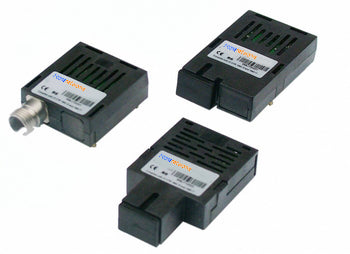
HFBR-1521Z | HFBR-2521Z | AFBR-1629Z | HFBR-2629Z AVAGO compatible full series
-
Совместимый с Cisco 10GBASE-BX20-D BiDi SFP+ 1330 нм-TX/1270 нм-RX 20 км DDM Simplex LC SMF модуль трансивера
Обычная цена $0.00Обычная цена -
AVAGO HFBR-1521Z Совместимое оптоволокно 650 нм Высокопроизводительное оптоэлектронное приемопередающее устройство DC-5 Мбод
Обычная цена $0.00Обычная цена -
AVAGO HFBR-1521Z Совместимое оптоволокно 650 нм Высокопроизводительное оптоэлектронное приемопередающее устройство DC-5 Мбод
Обычная цена $0.00Обычная цена -
AVAGO HFBR-1521Z Совместимое оптоволокно 650 нм Высокопроизводительное оптоэлектронное приемопередающее устройство DC-5 Мбод
Обычная цена $0.00Обычная цена


Power and Wavelength Testing
Test the signal delivering strength and wavelength, to ensure the signal decoding capacity of the receiver, and the wavelength remains consistent from the transmitter to the receiver.

Traffic Testing
Test the bit error rate and packet loss rate, to make them meet the corresponding standards and ensure the performance of transceivers.

Optical Performance Testing
Test the transceivers' eye diagram situation, receiving sensitivity, extinction ratio, wavelength, light-emitting, light-receiving, current and voltage, to ensure the signal quality, stability and reliability of the transmission.

End Face Testing
Check the end face of the transceivers and keep them clean for more stable data transmission, better performance, and durability.

Various Switch Tests
Every module is quality tested for compatibility in the multi-brand switches environment, guaranteeing flawless operations.