


Part Number: FT-2016SMP
16×100M Ports Plus 2 Gigabit Ports Enhanced Full‑Managed Ethernet POE Switch
FM 2000 switch series is a new generation of L2 switches with high performance, multiservice, high reliability and high security that are independently developed by FM. They support all kinds of connections varying from 10/100M to 1000M, so the network can be configured flexibly according to actual needs. The switches can access all Ethernet or fast-Ethernet devices, so they can be very compatible with the existing devices.
Properties
Excellent performance
- 32Gbps backplane bandwidth, hardware forwarding and wire-speed L2 packet forwarding rate
- Gigabit optical-fiber transmission with up to 80Km distance and directly connecting the MAN backbone network
High security and reliability
- Providing multiple user authentication modes such as 802.1x authentication
- Powerful ACL and hardware supporting L2 to L7 data filtration
Port-MAC-IP bind
Special ARP invasion detection to effectively stop ARP cheat
- Hardware IPv6 ACL
Flexible and various management modes
- Automatically identifying the straight-through cable and the intercrossed cable
- Adopting the cluster technology; supporting device cascading; managing uniquely through a unique IP address; saving address resources
- Multiple management modes such as Console port, Telnet, Web and SNMP are supported
Powerful flow and broadcast management
- Detecting and limiting broadcast storms automatically and supporting IGMP snooping to limit broadcast flooding
- Supporting flow control in full-duplex mode or half-duplex mode
- The rate limitation in a minimum step of 64K is supported on the Ethernet interface
- Supporting IP multicast and QoS
- Flexible QinQ realizes the QinQ function based on the five-element group
Varied protocols
- POE switches support 802.3af power supply on all their ports.
- POE switches already support 802.3at power supply. The maximum power supply on each port can reach up to 30W.
- POE switches support the configuration of power-supply priority, guaranteeing continuous power supply at those key network nodes.
- The POE switches support configuring the power consumption of power supply on their ports, saving the power and reducing users’ cost.
Technical Indexes
| 2008SMP | 2016SMP | 2024SMP | |
|---|---|---|---|
| Standard configuration | 8 10/100M RJ-45 MDI/MDI-X auto-adaptable interfaces | 16 10/100M RJ-45 MDI/MDI-X auto-adaptable interfaces | 24 10/100M auto-adaptable electric ports |
| 2 gigabit optical/electrical ports | 2 gigabit optical/electrical ports | 4 gigabit optical/electrical ports | |
| One Console port | One Console port | One Console port | |
| Processor | RISC 200MHz | ||
| Flash | 8MB | ||
| Memory | 32MB | ||
| Forwarding rate | 8.3Mpps | 10.7Mpps | 19.1Mpps |
| Backplane bandwidth | 32Gbps | ||
| Switching mode | Store forwarding | ||
| Address table | 8K | ||
| Queue buffer | 64MB | ||
| Size | 340*200*44mm | 442*315*44mm | 442*315*44mm |
| Power source’s characteristics | 110-240VAC (auto-adaptable), 47-63Hz, 1A/230V | ||
| Supporting POE power supply or supporting POE plus power supply | |||
| Power consumption | 2008SMP:Up to 170W (including POE power supply) and supporting the 802.3af power supply on 8 ports or the 802.3at power supply on 5 ports; | ||
| 2016SMP: Up to 400W (including POE power supply) and supporting the 802.3af power supply on 16 ports or the 802.3at power supply on 12 ports; | |||
| 2024SMP: Up to 400W (including POE power supply) and supporting the 802.3af power supply on 24 ports or the 802.3at power supply on 12 ports; | |||
| Indicator | Power indicator, system indicator, connection/data forwarding indicator, 10/100M indicator | ||
| Temperature and humidity | Working temperature: 0-50℃ | ||
| Storage temperature: -40-70℃ | |||
| Humidity: 0-90% no condensation | |||
| STP | IEEE 802.1D STP | ||
| IEEE 802.1w RSTP | |||
| IEEE 802.1S MSTP | |||
| VLAN | Supporting port-based VLAN | ||
| 802.1Q-tagged VLAN | |||
| QinQ, flexible QinQ | |||
| Private Vlan | |||
| Dynamic VLAN configuration through GVRP | |||
| Flow control | Backpressure is adopted for half-duplex, while IEEE802.3x is adopted for full-duplex. | ||
| CAR is supported; a 64K step limitation is conducted to the 100M port, and a 8M step limitation is conducted to the gigabit port. | |||
| Broadcast control | The broadcast storm is constrained. When the threshold value for controlling the broadcast storm is reached, the broadcast packets are stopped from being forwarded. | ||
| Multicast control | IGMP Snooping of multicast packets, IGMP v1/v2/v3 | ||
| Interface binding | Each port binding group contains up to 8 ports, and 6 port binding groups are supported meanwhile. | ||
| Dynamic LACP or static aggregation is supported. | |||
| Port Mirror | Supporting flow-based mirroring and the or port | ||
| Cascading | Stacking 32 switches | ||
| Adopting the cluster technology; managing uniquely through a unique IP address; saving address resources | |||
| Security features | IEEE 802.1x port authentication | ||
| Port security | |||
| Supporting IP ACL, MAC ACL and Vlan ACL on hardware | |||
| Supporting dhcp snooping on the hardware | |||
| Supporting DAI and static/dynamic ARP prevention on the hardware | |||
| Supporting user authentication through Web page | |||
| Supporting remote RADIUS and “TACACS+authentication” | |||
| Supporting hierarchical user management and password protection | |||
| QoS | Head Of Line (HOL) mechanism | ||
| Four transmission queues on each port are mapped to eight priority values of 802.1p. | |||
| WRED, WFQ, SP and FIFO | |||
| Best-effort service | |||
| Differentiated service | |||
| Strict priority | |||
| Weighted round robin | |||
| First come first served | |||
| TOS re-labeling | |||
| RTS | |||
| Network management | SNMP v1/v2 | ||
| RMON (groups 1, 2, 3, 9) | |||
| Telnet | |||
| CLI window | |||
| WEB page | |||
| Supporting NTP | |||
| Supporting SSH | |||
| Supporting PDP (compatible with Cisco CDP) |
Ordering Information
| 2008SMP | 2016SMP | 2024SMP | |
|---|---|---|---|
| Standard configuration | 8 10/100M RJ-45 MDI/MDI-X auto-adaptable interfaces | 16 10/100M RJ-45 MDI/MDI-X auto-adaptable interfaces | 24 10/100M auto-adaptable electric ports |
| 2 gigabit optical/electrical ports | 2 gigabit optical/electrical ports | 4 gigabit optical/electrical ports | |
| One Console port | One Console port | One Console port | |
| Processor | RISC 200MHz | ||
| Flash | 8MB | ||
| Memory | 32MB | ||
| Forwarding rate | 8.3Mpps | 10.7Mpps | 19.1Mpps |
| Backplane bandwidth | 32Gbps | ||
| Switching mode | Store forwarding | ||
| Address table | 8K | ||
| Queue buffer | 64MB | ||
| Size | 340*200*44mm | 442*315*44mm | 442*315*44mm |
| Power source’s characteristics | 110-240VAC (auto-adaptable), 47-63Hz, 1A/230V | ||
| Supporting POE power supply or supporting POE plus power supply | |||
| Power consumption | 2008SMP:Up to 170W (including POE power supply) and supporting the 802.3af power supply on 8 ports or the 802.3at power supply on 5 ports; | ||
| 2016SMP: Up to 400W (including POE power supply) and supporting the 802.3af power supply on 16 ports or the 802.3at power supply on 12 ports; | |||
| 2024SMP: Up to 400W (including POE power supply) and supporting the 802.3af power supply on 24 ports or the 802.3at power supply on 12 ports; | |||
| Indicator | Power indicator, system indicator, connection/data forwarding indicator, 10/100M indicator | ||
| Temperature and humidity | Working temperature: 0-50℃ | ||
| Storage temperature: -40-70℃ | |||
| Humidity: 0-90% no condensation | |||
| STP | IEEE 802.1D STP | ||
| IEEE 802.1w RSTP | |||
| IEEE 802.1S MSTP | |||
| VLAN | Supporting port-based VLAN | ||
| 802.1Q-tagged VLAN | |||
| QinQ, flexible QinQ | |||
| Private Vlan | |||
| Dynamic VLAN configuration through GVRP | |||
| Flow control | Backpressure is adopted for half-duplex, while IEEE802.3x is adopted for full-duplex. | ||
| CAR is supported; a 64K step limitation is conducted to the 100M port, and a 8M step limitation is conducted to the gigabit port. | |||
| Broadcast control | The broadcast storm is constrained. When the threshold value for controlling the broadcast storm is reached, the broadcast packets are stopped from being forwarded. | ||
| Multicast control | IGMP Snooping of multicast packets, IGMP v1/v2/v3 | ||
| Interface binding | Each port binding group contains up to 8 ports, and 6 port binding groups are supported meanwhile. | ||
| Dynamic LACP or static aggregation is supported. | |||
| Port Mirror | Supporting flow-based mirroring and the or port | ||
| Cascading | Stacking 32 switches | ||
| Adopting the cluster technology; managing uniquely through a unique IP address; saving address resources | |||
| Security features | IEEE 802.1x port authentication | ||
| Port security | |||
| Supporting IP ACL, MAC ACL and Vlan ACL on hardware | |||
| Supporting dhcp snooping on the hardware | |||
| Supporting DAI and static/dynamic ARP prevention on the hardware | |||
| Supporting user authentication through Web page | |||
| Supporting remote RADIUS and “TACACS+authentication” | |||
| Supporting hierarchical user management and password protection | |||
| QoS | Head Of Line (HOL) mechanism | ||
| Four transmission queues on each port are mapped to eight priority values of 802.1p. | |||
| WRED, WFQ, SP and FIFO | |||
| Best-effort service | |||
| Differentiated service | |||
| Strict priority | |||
| Weighted round robin | |||
| First come first served | |||
| TOS re-labeling | |||
| RTS | |||
| Network management | SNMP v1/v2 | ||
| RMON (groups 1, 2, 3, 9) | |||
| Telnet | |||
| CLI window | |||
| WEB page | |||
| Supporting NTP | |||
| Supporting SSH | |||
| Supporting PDP (compatible with Cisco CDP) |
This product belongs to F-tone Networks' optical components product line. For detailed specifications, please contact our sales team. Thank you!
Important Notice:
Performance figures, data and any illustrative material provided in this data sheet are typical and must be specifically confirmed in writing by F-tone Networks before they become applicable to any particular order or contract. In accordance with the F-tone Networks policy of continuous improvement specifications may change without notice.
The publication of information in this data sheet does not imply freedom from patent or other protective rights of F-tone Networks or others. Further details are available from any F-tone Networks sales representative.
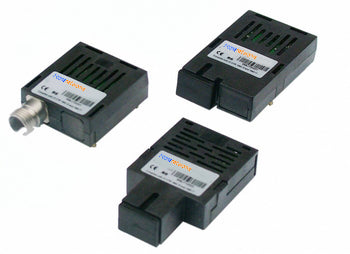
HFBR-1414TZ | HFBR-2412TZ AVAGO compatible full series

HFBR-1521Z | HFBR-2521Z | AFBR-1629Z | HFBR-2629Z AVAGO compatible full series
-
HFBR-1531Z,HFBR-2531Z,HFBR-1531Z 100% Compatible with Avago ,HFBR-2531Z 100% Compatible with Avago
Regular price $0.00Regular price -
AVAGO HFBR-2521ETZ Compatible Domestic Alternative Optical Module
Regular price $0.00Regular price -
AVAGO HFBR-1521ETZ Compatible Domestic Alternative Optical Module
Regular price $0.00Regular price -
AVAGO HFBR-1528Z Compatible Domestic Alternative Optical Module
Regular price $0.00Regular price


Power and Wavelength Testing
Test the signal delivering strength and wavelength, to ensure the signal decoding capacity of the receiver, and the wavelength remains consistent from the transmitter to the receiver.

Traffic Testing
Test the bit error rate and packet loss rate, to make them meet the corresponding standards and ensure the performance of transceivers.

Optical Performance Testing
Test the transceivers' eye diagram situation, receiving sensitivity, extinction ratio, wavelength, light-emitting, light-receiving, current and voltage, to ensure the signal quality, stability and reliability of the transmission.

End Face Testing
Check the end face of the transceivers and keep them clean for more stable data transmission, better performance, and durability.

Various Switch Tests
Every module is quality tested for compatibility in the multi-brand switches environment, guaranteeing flawless operations.