


Part Number: MC-SCE-LC-10G
SC equip to LC Multimode OM3/OM4 50/125 Mode Conditioning Patch Cable
F-tone manufactures and supplies standard and custom length 50/125, 62.5/125 and OEM equivalent mode conditioning fiber optic patch cords for 1000BASE-LX/LH Gigabit Ethernet (1300nm long wavelength) applications installed into existing multimode cable plants. These specialized cords help avoid Differential Mode Delay (DMD) effects that can occur when long wave transceiver modules operate at both single-mode and multimode wavelengths. And they are available with FC,ST, SC, LC and MT-RJ connectors.
How the Mode Conditioning Cable Works
The need for this conditioning fiber optic patch cord is due to the single-mode launch nature of the -LX or long-wave (1300nm) transceiver modules used for Gigabit Ethernet. Launching a single-mode laser into the center of a multimode fiber can cause multiple signals to be generated that confuse the receiver at the other end of the fiber. In that case, a mode conditioning patch cord eliminates these multiple signals by allowing the single-mode launch to be offset away from the center of a multimode fiber. This offset point creates a launch that is similar to typical multimode LED launches. (see diagram below)
Notes:
How to Install the Mode Conditioning Cable
If your gigabit LX switch is equipped with SC or LC connectors, please be sure to connect the yellow leg (Singlemode) of the cable to the transmit side, and the orange leg (multimode) to the receive side of the equipment. It is imperative that this configuration be maintained on both ends. The swap of transmit and receive can only be done at the cable plant side. (see diagram below)
- If some customers remain reluctant to deploy MCP cables, and for customers using OM3 or OM4 cables, please measure the power level before plugging the fiber into the adjacent receiver. When the received power is measured above -3dBm (in 1000BASE-LX links), a 5-dB attenuator for 1300nm should be used and plugged at the transmitter source of the optical module on each side of the link. Actually, OM3/OM4 MCP can also work in this event. While whether all multimode fiber types require mode conditioning, you can contact the manufacturer of your installed cable for the answer.
- Mode conditioning patch cords can only convert single-mode to multimode. If you want to convert multimode to single-mode, then a media converter will be required.
- Another alternative for short reaches within the same location is to use a single-mode patch cable. There will be no saturation over single-mode fiber.
Things to Know When Using Mode Conditioning Cables
- Mode conditioning patch cords are usually used in pairs. Which means that you will need a mode conditioning patch cord at each end to connect the equipment to the cable plant.
- Generally, Mode Conditioning patch cords are required for link distances greater than 984 feet (300 meters).
Features
- Increased transmission bandwidth up to 4 times
- Fits existing cabling scheme
- Easy installation
- Removes effects form DMD
- Permanent, low-profile offset closure
- Enables 1000Base-LX/LH optics to be used with Multi-Mode Fibre
- PC, UPC, APC polish types
- Low insertion loss (<1dB)
- Reduced modal noise
- Vcsel laser source into standard multimode fiber
- OFNR rated jacket complies with strict building codes
- Compliant with IEEE 802.3 applications
Application
- Gigabit Ethernet
- Equipment interconnection
- High speed data transfer
- LAN
- Telecom network
MAKE TO ORDER Customizing your Mode Conditioning Cable (options)
| Cable Jacket | Fiber Type | Connetcors | length |
|---|---|---|---|
|
|
First End
|
|
For assistance customizing your Mode Conditioning Cable, please call us at +1-205-282-9089 or email to [email protected].
| InsertionLoss(dB) | Non-ConditionedChannel(Multimode) | |||
| LC | SC | ST | MTRJ | |
| <0.5(max) | <0.5(max) | <0.5(max) | <0.5(max) | |
| ConditionedChannel(MultimodeDirection) | ||||
| LC | SC | ST | MTRJ | |
| <1.0 | <1.0 | <1.0 | <1.0 | |
| ConditionedChannel(Single-modeDirection) | ||||
| LC | SC | ST | MTRJ | |
| >2.0;<22.0 | >2.0;<22.0 | >2.0;<22.0 | >2.0;<22.0 | |
| FerruleMaterial | Ceramic | Ceramic | Ceramic | Thermoplastic |
| HousingMaterial | Composite | Composite | Metal | Composite |
This product belongs to F-tone Networks' optical components product line. For detailed specifications, please contact our sales team. Thank you!
Important Notice:
Performance figures, data and any illustrative material provided in this data sheet are typical and must be specifically confirmed in writing by F-tone Networks before they become applicable to any particular order or contract. In accordance with the F-tone Networks policy of continuous improvement specifications may change without notice.
The publication of information in this data sheet does not imply freedom from patent or other protective rights of F-tone Networks or others. Further details are available from any F-tone Networks sales representative.
HFBR-1414TZ | HFBR-2412TZ AVAGO compatible full series

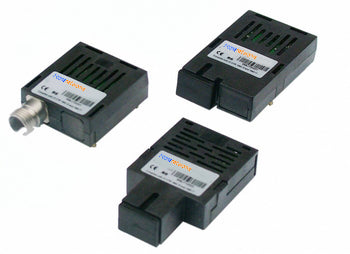
HFBR-1521Z | HFBR-2521Z | AFBR-1629Z | HFBR-2629Z AVAGO compatible full series
-
HFBR-1531Z,HFBR-2531Z,HFBR-1531Z 100% Compatible with Avago ,HFBR-2531Z 100% Compatible with Avago
Regular price $0.00Regular price -
AVAGO HFBR-2521ETZ Compatible Domestic Alternative Optical Module
Regular price $0.00Regular price -
AVAGO HFBR-1521ETZ Compatible Domestic Alternative Optical Module
Regular price $0.00Regular price -
AVAGO HFBR-1528Z Compatible Domestic Alternative Optical Module
Regular price $0.00Regular price


Power and Wavelength Testing
Test the signal delivering strength and wavelength, to ensure the signal decoding capacity of the receiver, and the wavelength remains consistent from the transmitter to the receiver.

Traffic Testing
Test the bit error rate and packet loss rate, to make them meet the corresponding standards and ensure the performance of transceivers.

Optical Performance Testing
Test the transceivers' eye diagram situation, receiving sensitivity, extinction ratio, wavelength, light-emitting, light-receiving, current and voltage, to ensure the signal quality, stability and reliability of the transmission.

End Face Testing
Check the end face of the transceivers and keep them clean for more stable data transmission, better performance, and durability.

Various Switch Tests
Every module is quality tested for compatibility in the multi-brand switches environment, guaranteeing flawless operations.